Filament Refill vs. Spool: What's the Difference?
Updated September 22, 2026
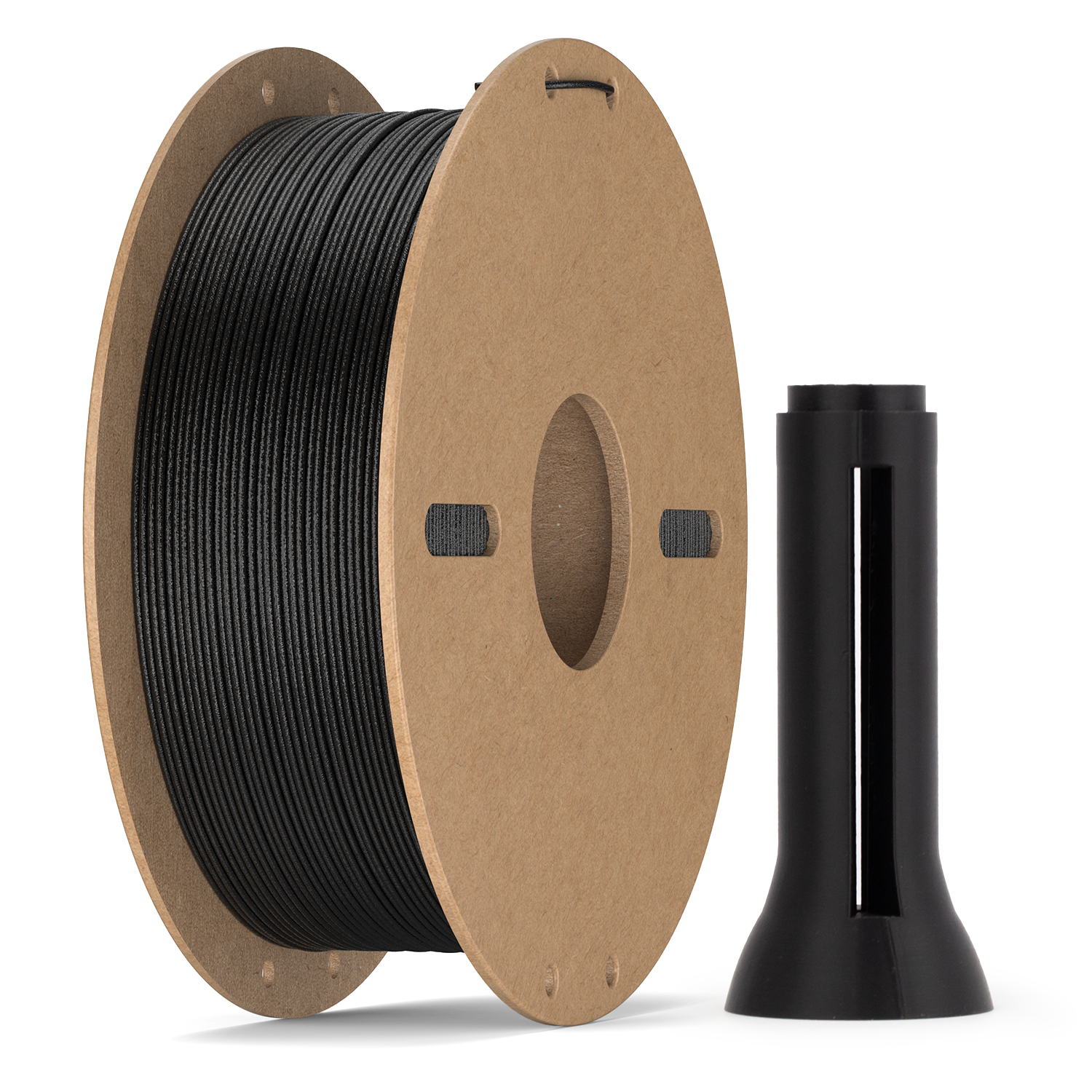
A filament refill is a coil of filament wound without its own hub or side plates, sold to be mounted onto a spool you already own. A reusable spool (sometimes called a "master spool") is the reusable hardware - hub, sides, sometimes RFID or NFC hardware - that a refill clips, screws, or snaps onto. Buying the wrong one on its own doesn't get you a usable roll of filament: a refill without a compatible spool has nothing to mount to, and an empty spool without a refill is just hardware.
Why refills and spools are sold separately
Manufacturers including Bambu Lab, SUNLU, eSUN, Polymaker, and Prusament all sell refill-only filament as a lower-waste, often lower-cost alternative to a full spool with new plastic sides and a new hub every time. The tradeoff is that the refill has to physically and mechanically match the spool it's going onto - core diameter, width, and the locking mechanism (clips, threads, or snap rings) all have to line up.
Two separate fit questions
SpoolNook treats "does this refill fit my setup" as (at least) two distinct questions, and answering one doesn't answer the other:
- Does the refill physically fit the spool? This is about the refill's core diameter, width, and locking mechanism matching the spool's hub.
- Does the assembled spool fit and operate in your feeder or AMS? This is about the assembled spool's outer diameter and width matching your printer's automatic feeder, which is a separate tolerance published by the feeder's manufacturer.
A refill can fit a spool perfectly and still not fit (or not be recognized by) your specific feeder - and vice versa. Material suitability and RFID/automatic material recognition are two more separate questions again; see the checker for how SpoolNook keeps all four apart.
Check your exact combination
Because fit depends on the exact brand, model, and generation of both the refill and the spool, general statements like "refills are universal" or "this fits most spools" aren't reliable. Use the compatibility checker to check your specific pairing, or start with identifying your spool if you're not sure exactly what you have.